Upkeep guide
Care Across Brushes, Metal and Fabric
Every object in a routine either touches skin or sits near it. A modest, regular care rhythm keeps brushes performing, metal bright and fabric soft — and makes the whole kit last longer.
Why care belongs in the ritual
Care is often treated as a chore that happens "when there is time", which in practice means rarely. Yet the condition of the tools changes the result: a brush stiff with old foundation deposits product unevenly, a tarnished chain looks dull beside a luminous finish, and a scarf creased from a crowded drawer reads as careless however good the makeup is. Building care into a fixed weekly moment — the same evening, the same towel, the same sequence — is what makes it sustainable.
The guidance below covers ordinary household upkeep. It is not medical advice. If you have a skin condition, irritation or an infection, follow the guidance of a pharmacist, GP or dermatologist, and stop sharing or using tools that touch the affected area.
Care sequence · brushes
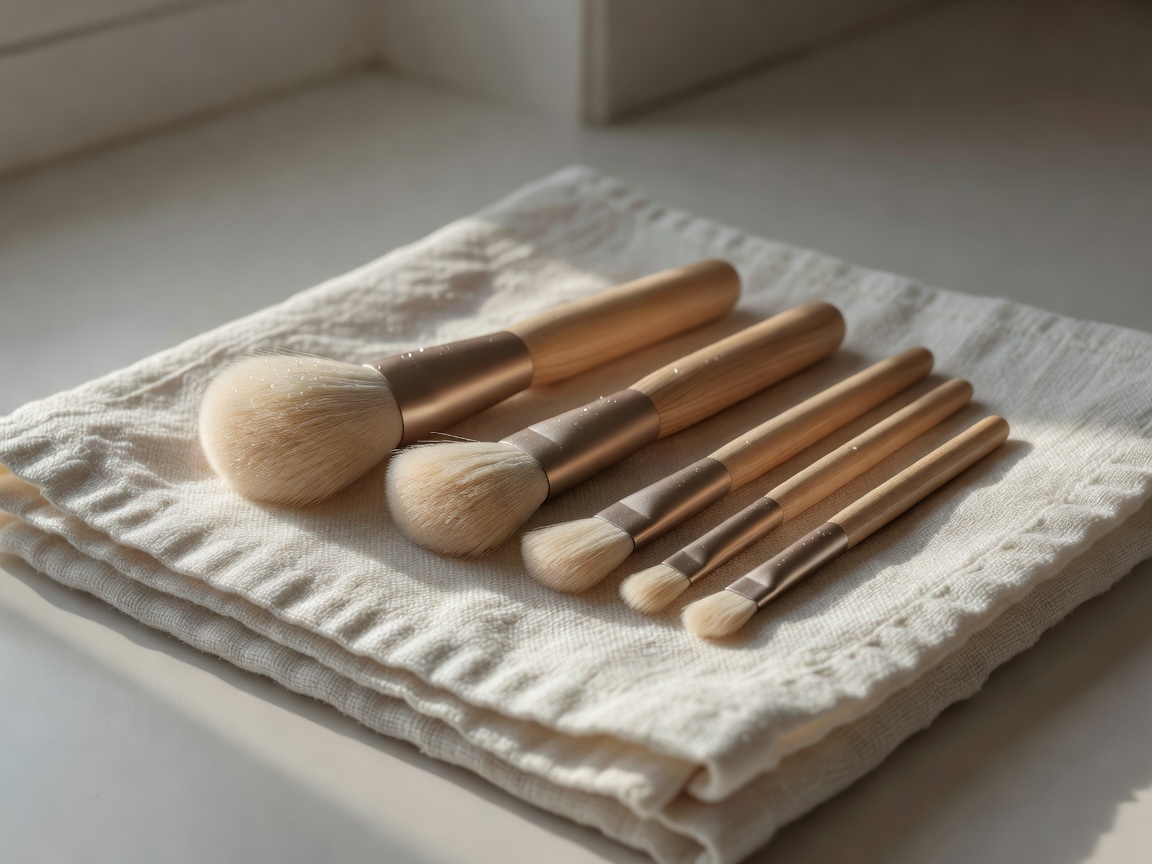
Washing day for brushes and sponges
Rinse tips only
Hold the brush bristles-down under lukewarm water. Keep water away from the ferrule, where glue holds the bristles.
Lather gently
Use a mild soap or a gentle shampoo; swirl on your palm or a textured mat until the foam runs clear.
Rinse and reshape
Squeeze out water with a clean towel and reshape the head with your fingers.
Dry flat or downward
Lay brushes flat at the edge of a counter or hang them bristles-down so water does not seep into the handle.
A realistic washing rhythm
Many makeup artists suggest washing brushes used with liquid or cream products about once a week, powder brushes roughly every two weeks, and damp makeup sponges after each use. These are practical starting points rather than rules, and your own rhythm may differ with how often you wear makeup. Sponges should be replaced when they begin to tear or stop springing back. Never share eye or lip tools; this is one of the few habits widely recommended across professional and consumer guidance alike.
Compacts, palettes and the period-after-opening symbol
Wipe compact mirrors and palette edges with a soft cloth during your weekly reset. Powder pans can be lightly cleaned by scraping away the hardened top layer that sometimes forms with use. Check the open-jar symbol on each product: under EU Cosmetics Regulation (EC) No 1223/2009, products with a shelf life over 30 months display this period-after-opening mark, such as 6M, 12M or 24M. In the United States, the FDA notes that cosmetic expiry is generally not mandatory on labels, so a written opening date on the base becomes even more useful. Discard products that change smell, texture or colour, regardless of the date.
Care sequence · metal
Jewellery and metal objects
Sterling silver
Tarnish is a reaction with sulphur in the air. Store in a closed pouch or box, ideally with an anti-tarnish strip; polish with a dedicated silver cloth.
Gold
Wipe with a soft cloth after wear; occasional warm water with a drop of mild soap and a very soft brush lifts residue.
Pearls
Last on, first off: put them on after makeup and fragrance, wipe with a damp cloth, store flat.
Plated pieces
Avoid abrasive polish; plating is thin and wears through.
Care sequence · fabric & leather
Scarves, pouches and bags
Silk
Follow the care label. Hand-wash cool with a gentle detergent where permitted, roll in a towel, dry away from direct sun.
Wool and cashmere
Air after wearing, fold rather than hang, and store with cedar to discourage moths.
Leather
Wipe with a dry cloth; condition occasionally; keep makeup pouches inside bags to prevent powder stains.
Makeup pouches
Empty and wash or wipe lining monthly; spills set quickly.
Order of operations: makeup before jewellery
A small sequence change protects both makeup and accessories. Apply skincare, makeup and any fragrance first, let them settle, then put on jewellery and scarves. This keeps oils and pigment off delicate materials such as pearls, silk and porous stones, and prevents a fresh lip from catching on a scarf. At the end of the day, reverse it: accessories off and wiped first, then makeup removed.
A care calendar that fits on one line
Daily: wipe and return. Weekly: wash brushes, check labels, wipe mirrors. Monthly: clean pouches, polish silver, air scarves. Quarterly: review the reserve shelf. That is the whole system. It is deliberately modest, because a routine that asks for an hour each week tends to be abandoned within a month, while a ten-minute ritual can last for years.