Makeup guide
Set the Finish, Keep Your Identity
A finish is the way a surface handles light. Choosing it first — before any colour — is the quickest way to a face that suits the setting and still looks like you.
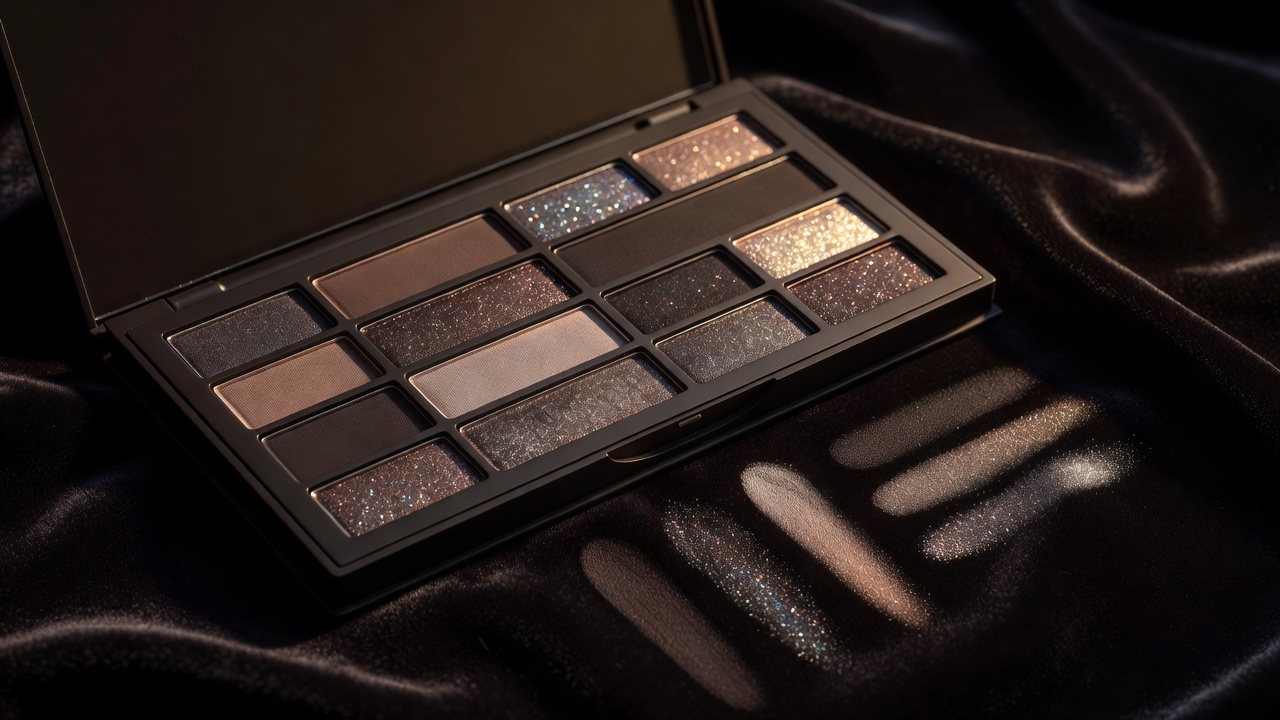
Why finish comes before shade
When a look feels "off", the cause is often not the colour but the way the surface behaves. A perfectly matched foundation can still read as heavy under a fluorescent ceiling, and a soft rose lip can look unfinished in candlelight if it has no sheen at all. Finish decides how much light returns from the skin, and that single choice influences how every accessory nearby is perceived. Polished gold beside a luminous cheekbone looks deliberate; the same earring beside a very flat, powdery complexion can look borrowed from another outfit.
So the register begins with three questions, asked before you open a single compact: Where will the light come from? How close will people be? How long does this need to hold? Everything else — colour, intensity, the number of steps — follows those answers.
Reading light, distance and duration
Light. Daylight from a north-facing window is cool and even. Domestic bulbs labelled around 2700K are noticeably warm. Office panels and many bathroom fittings sit in between and come from directly above, which exaggerates shine on the forehead and nose. If you can, check your finished face in the type of light you will actually be in, not only at the vanity.
Distance. Conversation across a desk, a camera at arm's length and a crowded dinner table each reveal texture differently. Close distance forgives very little shimmer; a table two metres away forgives almost everything.
Duration. A two-hour event allows a fragile, glossy finish. A twelve-hour travel day rewards formulas that wear down gracefully rather than separating.
Finish families
Four finishes, four jobs
Matte
Absorbs light; useful for close distance, overhead light and video. Keep it thin so skin texture stays visible rather than masked.
Satin
A soft, low sheen. The most adaptable finish for long days that move between daylight and warm interiors.
Luminous
Reflects warm, low light. Ideal for evenings; place it only on high points so it reads as glow rather than shine.
Sheer tint
Colour without coverage. Best for relaxed weekends and for anyone who prefers their natural skin to remain the lead.
Quick check
The three-point mirror test
Arm's length, facing the main light.
Turn forty-five degrees and look at the cheek.
Step back two metres; does one feature dominate unintentionally?
Keeping your identity at the centre
A finish should support the face you already have, not replace it. If your brows are naturally strong, a matte complexion with a satin lip keeps attention balanced. If freckles are part of how you recognise yourself, sheer tint or a thin satin base lets them remain. Nothing on this page suggests that one finish is better, more polished or more appropriate for a particular person; the aim is only that the surface suits the situation and that you still recognise yourself when you glance in a shop window.
A helpful habit is to keep one "signature" element constant across finishes — perhaps the same lip colour family or the same way of shaping the brow — and let the surface change around it. That constant is what makes different looks feel like they belong to one person.
Holding power without piling on layers
The instinct when a look must last is to add: primer, setting spray, extra powder. Often the better move is to subtract. Thin layers allowed to settle for a minute between steps tend to wear more evenly than a thick single application. Cream products set with a light press of powder only where the face creases. Lip colour applied, blotted and reapplied once usually outlasts a single heavy coat. These are craft habits rather than product claims, and they work with what is already in the kit.
How finish talks to accessories
Surfaces converse. High-polish metal, satin silk and glossy patent leather all echo a luminous finish. Brushed or matte metal, wool, suede and tortoiseshell eyewear sit quietly beside matte skin. Mixing is fine when it is intentional: a matte face with one very bright earring is a clear contrast; a luminous face, a shiny bag, a satin scarf and high-polish jewellery all at once is simply a lot of reflection competing for attention. When in doubt, let either the face or a single accessory carry the shine.
The next guide, Let Each Accessory Earn Its Place, takes that idea further by giving each piece a defined role.