Accessories guide
Let Each Accessory Earn Its Place
An accessory with a job is easy to choose and easy to leave at home. Four roles — anchor, echo, contrast and utility — turn a drawer of possibilities into a short, confident decision.
The four roles
Anchor
The single strongest piece. Everything else steps back.
Echo
Repeats a tone or texture already present on the face.
Contrast
A deliberate counterpoint in colour, texture or scale.
Utility
Carries, protects or corrects: eyewear, bags, a compact mirror.
The anchor: one piece leads
An anchor is the accessory a stranger would remember: a sculptural earring, a patterned silk square, a large cocktail ring, a structured bag in a strong colour. When an anchor is present, the face usually works best quietly — a satin or sheer complexion, defined brows, a lip in a neutral or the anchor's own colour family. The anchor does the talking, and the rest of the look gives it room.
A useful rule: one anchor per look, positioned where you want attention. Near the face for conversation, at the wrist for gesture, at the hip or hand for movement.
The echo: repetition that reads as intention
Echoes link the face and the accessory through a shared quality. A bronze eyelid and warm yellow-gold hoops; a berry lip and a garnet stud; a luminous cheek and a polished chain. The echo does not need to be an exact match — in fact, slight variation looks more natural — but it should share at least one property: temperature, depth or sheen.
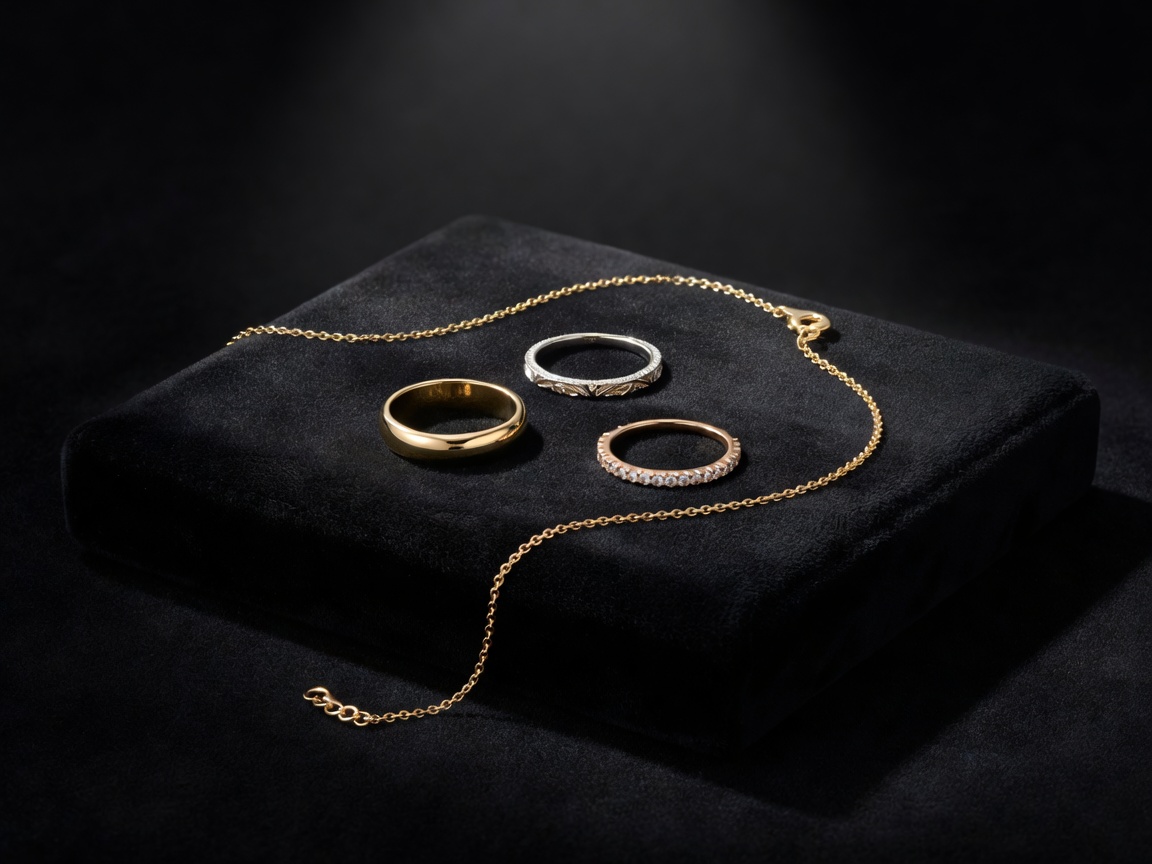
Metal tone is the most common echo. Yellow gold, including 18-carat (75 per cent pure gold) and 9-carat pieces, reads warm. Sterling silver, marked 925 for 92.5 per cent silver, and white gold read cool. Rose gold sits between. In the United Kingdom, precious metal over certain weights must be hallmarked by one of the four assay offices — London, Birmingham, Sheffield or Edinburgh — and that mark is a reliable way to know what a piece actually is before you plan around it.
The contrast: a counterpoint with purpose
Contrast is what keeps a coordinated look from feeling uniform. A red silk scarf against bare matte skin; chunky tortoiseshell frames with very minimal makeup; a single silver cuff with otherwise warm-toned jewellery. The rule for contrast is that it should be singular and visible. Two or three competing contrasts tend to read as accident rather than decision.
Utility: the role people forget
Eyewear, bags, card cases, hair clips and the compact mirror in your pocket all have a function first. They still participate in the look. Frames, in particular, sit directly on the face and interact with brows and eye makeup: a heavy upper rim can make strong liner disappear, while a thin metal frame lets eye definition carry. Choosing utility pieces in neutral, durable finishes means they can sit beside any anchor without competing.
Accessory-role comparison
Who does what beside which finish
| Accessory | Typical role | Works beside | Watch for |
|---|---|---|---|
| Statement earrings | Anchor | Satin skin, quiet lip | Competing with a bold lip in the same zone |
| Fine gold chain | Echo | Luminous or bronze tones | Disappearing against very warm fabrics |
| Silk square scarf | Contrast or anchor | Matte or sheer skin | Pattern clashing with patterned clothing |
| Optical frames | Utility | Any finish; adjust liner weight | Upper rim hiding eye definition |
| Structured bag | Utility or anchor | Matte, satin | A second anchor at the same time |
| Hair clip or barrette | Echo or contrast | Any finish | Metal tone clashing with jewellery |
Skin contact and metal sensitivity
Some people react to nickel, which has historically been used in costume jewellery and some white-gold alloys. In the European Union, nickel release from items in prolonged skin contact is restricted under the REACH regulation (Annex XVII, entry 27), and the UK retains an equivalent rule. That restriction is a useful baseline, but it is not a guarantee for every individual. If a piece leaves marks or discomfort, stop wearing it and seek advice from a pharmacist or dermatologist; this register does not offer medical guidance.
A five-second decision
Before leaving, look at what you are wearing and name each piece's role aloud. If two items are both "anchor", remove one. If nothing echoes the face, swap one utility piece for one in a matching metal. If everything echoes, consider whether a single contrast would make the look feel more alive. The point is not to own more pieces, but to use the ones you have with a clearer sense of purpose.
Next, see how those pieces live when they are not being worn in A Kit You Can Actually Navigate.